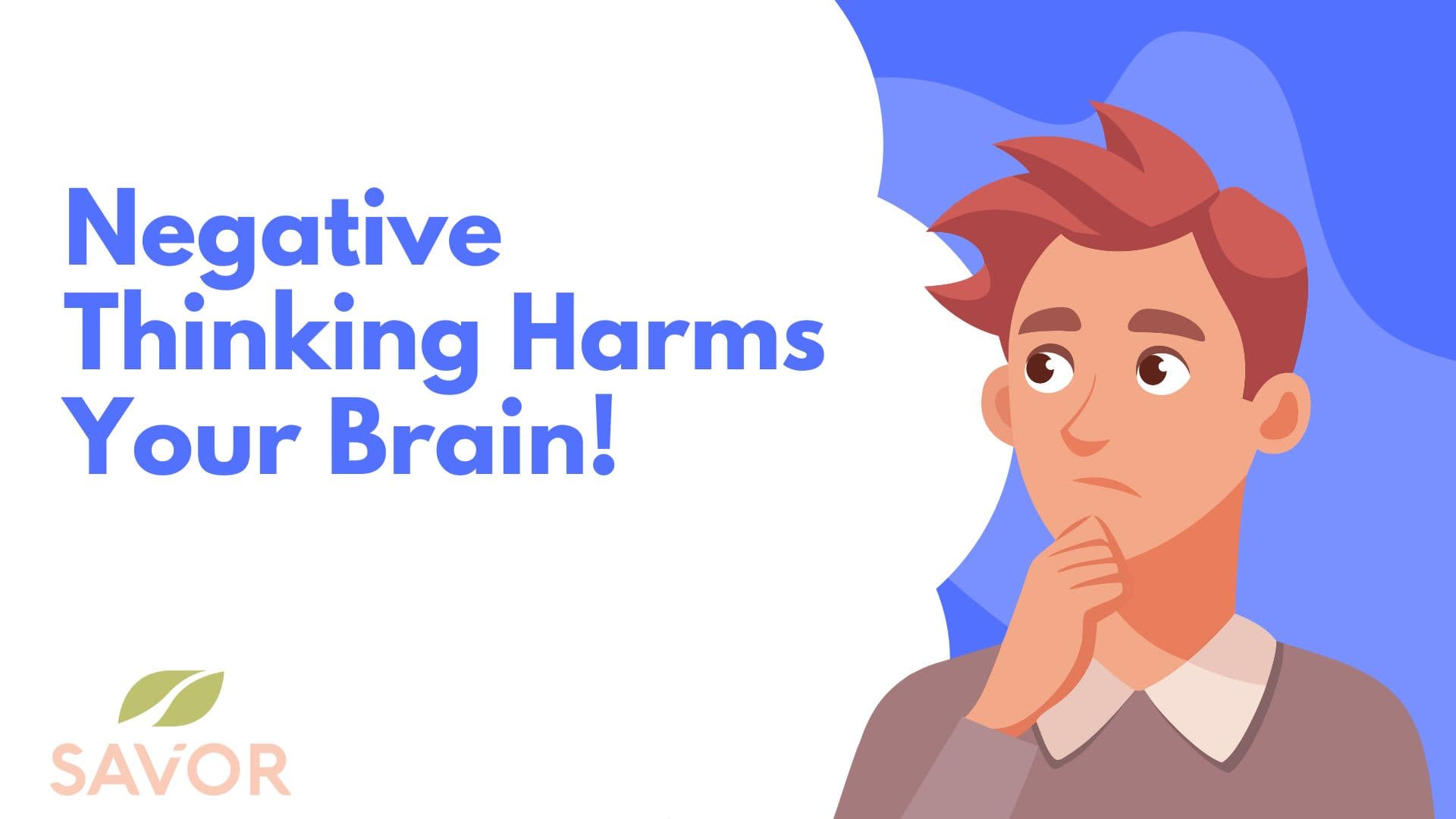
Have you ever found yourself stuck thinking about something bad that happened, or worrying again and again about what might go wrong tomorrow?
You might call it “overthinking” or just “can’t stop worrying”. In psychological research this kind of habit is often called repetitive negative thinking (RNT).
What’s interesting: recent scientific studies suggest that RNT might not just make us feel bad — it could also chip away at our brain health over time.
What is “repetitive negative thinking”?
In simple terms, RNT means getting caught in a loop of negative thoughts that are hard to stop. Two common forms are:
Rumination: Dwelling repeatedly and passively on things that already happened, especially negative events, and asking “Why did this happen? What will people think?” without moving to action.
Worry: Obsessively thinking about possible threats or uncertain future events (“What if I lose my job? What if I get sick?”).
So RNT is basically: the mind keeps dragging us back into negative-loops of thinking instead of letting us go and move forward.
Why does this matter for brain health?
One 2025 study of older adults (aged 60+) in China found that higher levels of RNT were associated with lower cognitive scores, even after taking into account age, education, number of hobbies, and other factors.
In that study, older adults in the higher quartiles of RNT had poorer results on tests that measure memory, thinking skills, and attention.
Another earlier study found that older adults who reported more RNT also reported more memory or thinking worries — even if standard tests didn’t show large deficits yet.
RNT is associated with brain structure changes and risk markers
Research from a 2020 study looked at brain scans and found that people with more RNT had higher amounts of amyloid and tau: the proteins linked with Alzheimer’s disease.
Also brain imaging suggests that RNT is associated with thinner cortex (outer layer of the brain), changes in white matter (the wiring), especially in brain areas linked to control of thoughts, emotions and attention.
The “how” or mechanism
Researchers propose a few possible ways RNT might lead to worse brain health:
Cognitive debt hypothesis: The idea is that constantly dwelling on negative thoughts uses up the brain’s limited resources (attention, executive control, memory), leaving less capacity for healthy brain work.
Stress / physiological route: Repetitive negative thinking triggers stress responses: higher cortisol (stress hormone), inflammation, vascular issues, higher blood pressure. These things can damage brain cells over time, or promote buildup of harmful proteins.
Structural brain changes: As above, research shows links between high RNT and changes in brain structure in areas like the dorsolateral prefrontal cortex, anterior cingulate cortex — regions important for thinking clearly, controlling emotions and attention.
How we can overcome repetitive negative thinking and protect our brain
Here are some science-based, practical steps:
1. Notice when you’re in a loop
Train yourself to recognise when you are ruminating (“Why did I do that?”, “What if this happens?”) or worrying (“What if I lose my job?”).
Simply naming the pattern (“Ah, this is rumination”) helps break the automaticity.
2. Switch to problem-solving or action
Rumination often stays stuck. Ask: Is there some small action I can take right now? If yes, do it. If no — then you might gently redirect your attention elsewhere.
For worries about the future: limit the “worry slot”. For instance, pick a short “worry time” (10 minutes) then move on.
3. Healthy lifestyle to support brain health
Good sleep, physical activity, healthy diet, social connection — these are well known to protect the brain. When RNT is present, they become even more important.
Because RNT may amplify stress or inflammation, a body that’s healthier physically gives the brain more resilience.
4. Talk it out and get help when needed
If your worrying or rumination is constant, interfering with sleep, daily tasks, mood – it may help to speak with a counsellor or psychologist.
Cognitive behavioural therapy (CBT) or therapies that focus on thinking patterns may reduce RNT. The earlier such support, the better.
It’s not about forcing “always be happy”. It’s about giving the mind alternatives: reflection (what went ok today?), planning (what good can I do tomorrow?), gratitude (what was one small positive?).
These help weaken the dominance of negative loops and free up mental energy for growth, creativity and memory.
Planning an event? Let Savor of Life bring the flavors to you! From social gatherings to large celebrations, our catering services offer delicious, high-quality meals tailored to your needs.
Ready to transform your wellness with specially made meals? Sign up for our Savor Transform 10-Day Challenge and enjoy exclusive perks, special offers, and unforgettable meals!